
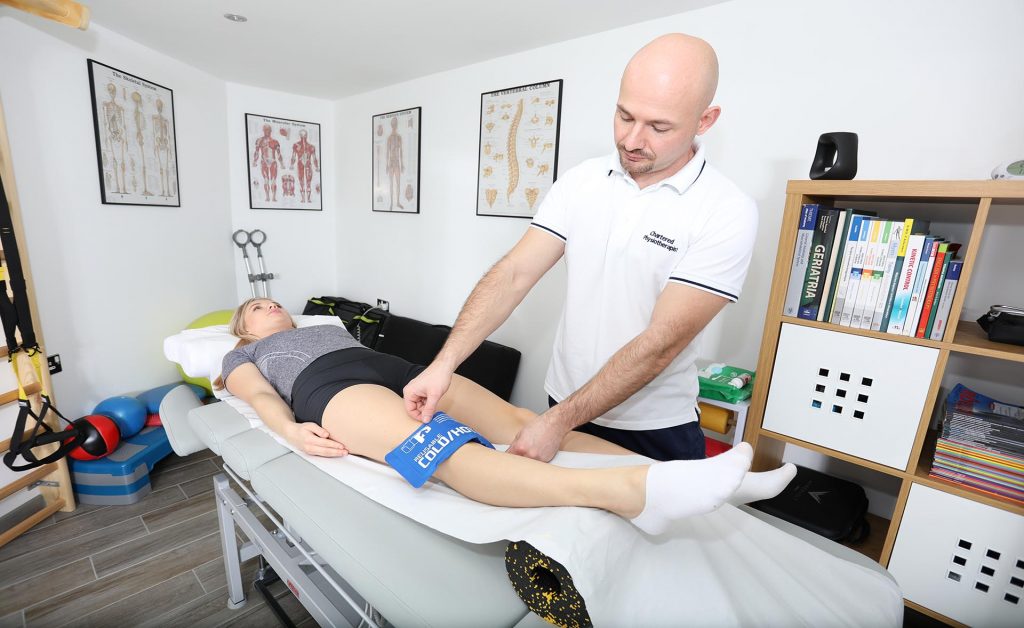
If pain around your kneecap is stopping you from enjoying your runs, you may be dealing with runner’s knee treatment – also known as patellofemoral pain syndrome. The good news is that with the right guidance, most people can get back to comfortable running without long-term damage. In this guide, you’ll learn what runner’s knee really is, how to recognise the symptoms, and the step-by-step recovery plan we use at PhysioCraft in Southampton to help runners return to the activities they love.
What Is Runner’s Knee and Why Does It Happen?
Runner’s knee is a broad term used to describe pain at the front of your knee, usually around or behind the kneecap. Despite the name, it doesn’t only affect runners – you might notice it when walking downstairs, squatting, sitting for long periods, or even just getting up from a chair. The condition is usually related to how your kneecap tracks in its groove and how well the muscles around your hip, thigh and calf are working together.
At PhysioCraft in Southampton, we often see runner’s knee develop gradually rather than from a single incident. It commonly follows a sudden increase in training volume, intensity, or hill work. Sometimes, subtle issues like weak hip muscles, stiff ankles, or tight quads and IT band can gradually overload the tissues around the kneecap. Over time, this leads to irritation, inflammation and that familiar ache or sharp twinge at the front of the knee.
The important thing to understand is that most cases respond well to structured rehabilitation. You’re not doomed to give up running. With a tailored runner’s knee treatment plan and sensible training changes, you can usually get back to your usual distance and pace – often with better strength and form than before.
Common Symptoms: How to Know If It’s Really Runner’s Knee
Recognising the typical signs of runner’s knee helps you take action early, before the pain becomes constant or starts affecting both knees. While only a proper assessment can give you a clear diagnosis, there are some patterns we see again and again in our Southampton clinic.
The most common symptom is a dull, aching pain around or behind the kneecap. You might feel it when running, especially downhill or on stairs. Many people describe a “grinding” or “pressure” sensation when bending the knee. Sitting for long periods – such as at a desk, in the car, or at the cinema – can make the front of the knee feel tight or sore, a feeling sometimes called the “theatre sign”.
Another clue is how your knee reacts to loading. Squats, lunges, and jumping may trigger discomfort, particularly if your knee collapses inwards or your weight shifts unevenly between legs. You may also notice mild swelling around the kneecap or a feeling that your knee is “puffy” after a run. If you’re experiencing these signs, it’s worth seeking a professional opinion rather than pushing through in the hope it will disappear on its own.
Red Flags You Shouldn’t Ignore
While runner’s knee treatment usually focuses on conservative care, there are symptoms that warrant more urgent investigation. Sudden, severe pain, a locked knee that won’t fully straighten, significant swelling after a twist, or a feeling that the knee is giving way repeatedly can point to other injuries such as ligament tears or meniscal damage.
If you notice any of these red flags, it’s important to see a healthcare professional promptly. At PhysioCraft in Southampton, we can perform a detailed assessment and examination to clarify what’s going on and advise on the safest next steps.
Why Self-Diagnosis Can Be Misleading
It’s tempting to rely on online checklists and assume you know exactly what’s wrong. However, conditions like patellar tendinopathy, IT band syndrome, early osteoarthritis and meniscal irritation can all mimic runner’s knee. Treating the wrong problem can delay your recovery and keep you stuck in the same painful cycle.
A structured assessment considers your training history, footwear, running technique, strength, flexibility and joint mobility. This allows your physio to create a targeted plan instead of generic advice, which is crucial if you want to get back to running confidently rather than constantly worrying about your knee.
What Causes Runner’s Knee? The Real Reasons Behind the Pain
There isn’t one single cause of runner’s knee. Instead, it’s usually a combination of factors that gradually overload the tissues around your kneecap. Understanding these causes is key, because effective runner’s knee treatment always targets the underlying issues rather than just masking symptoms.
Training errors are one of the biggest culprits. Rapidly increasing your weekly mileage, adding speed sessions too quickly, or suddenly introducing hills can all increase stress on the front of the knee. Running on cambered roads or always using the same direction on a track can also create imbalances, making one knee work harder than the other.
Biomechanical factors also play a major role. Weak hip abductors and external rotators can cause your knee to drift inwards with each step, increasing pressure on the kneecap. Limited ankle mobility may change how your foot hits the ground and how forces travel up the leg. Overly tight quads, hamstrings, or calves can alter the tracking of your kneecap and the way your knee bends and straightens.
The Role of Muscle Imbalance and Core Control
When we assess runners in Southampton with front-of-knee pain, we often find a pattern: strong quads but relatively weaker glutes and deep hip stabilisers. This imbalance means the knee does more of the work that should be shared with the hip and core. Over time, the tissues around the kneecap become irritated from the extra load.
Improving hip and core strength is therefore a key part of effective runner’s knee treatment. It doesn’t mean endless sit-ups, but targeted exercises that help your body control the alignment of your leg with each stride. Better control means less strain on the knee and a smoother, more efficient running style.
Footwear, Surfaces and Lifestyle Factors
Your shoes and the surfaces you run on can either support your recovery or keep aggravating the problem. Very worn-out trainers, sudden changes to minimalist or maximalist shoes, or always running on hard concrete can all contribute to symptoms. In Southampton, we often see flare-ups when runners move from softer park paths to long road runs without a gradual transition.
Lifestyle matters too. Long days sitting at a desk, frequent kneeling, or repetitive squatting at work can keep the front of your knee under constant low-level stress. Combined with your training load, this may be enough to tip your knee into pain. Addressing these small daily habits alongside your rehab exercises creates a far more sustainable solution.
Your Step-by-Step Recovery Plan for Runner’s Knee
A successful runner’s knee treatment plan doesn’t mean you have to stop all activity. Instead, it’s about finding the right balance between rest, modified training and targeted strengthening so your knee has a chance to calm down while you stay as active as possible.
At PhysioCraft in Southampton, we typically structure recovery in phases. The exact timeline varies from person to person, but the principles remain similar: reduce irritation, restore movement, rebuild strength and control, then gradually return to full running. Rushing any of these steps is one of the main reasons symptoms keep coming back.
In the early phase, the focus is on settling pain and swelling. This might mean temporarily reducing your running distance or switching some sessions to lower-impact options like cycling, swimming or the cross-trainer. Simple strategies such as ice after activity, gentle stretching and avoiding deep squats or lunges can also help.
Rebuilding Strength and Control
Once pain is more manageable, strengthening becomes the priority. Exercises often start with controlled movements such as straight-leg raises, wall sits, bridges and side-lying leg lifts. As your control improves, you’ll progress to more functional movements like squats, step-downs and single-leg work, always within a pain-free or low-pain range.
To support this process, your physio may use hands-on techniques such as manual therapy or sports massage to ease tight tissues and improve joint mobility. These approaches don’t replace exercise, but they can make it easier and more comfortable to move well, especially in the early stages.
Gradual Return to Running
Many runners in Southampton worry that once they stop, they’ll lose all their fitness. That’s why a well-designed runner’s knee treatment plan includes a structured return-to-running program rather than a vague instruction to “rest until it feels better”. This might start with walk–run intervals on flat, even ground, then build up to continuous running as your knee tolerates more load.
You’ll also be guided on pacing, cadence (steps per minute), and how to monitor your pain response. A useful rule is that mild discomfort (up to 3/10) during a run that settles within 24 hours is usually acceptable, but increasing pain, limping, or swelling are signs that you’ve pushed too far. With the right progression, most people can return to their previous level – and often find they run more efficiently than before their injury.
Home Care Tips and When to See a Physio
There’s a lot you can do at home to support your runner’s knee recovery. Simple changes to your routine, combined with consistent exercises, can make a big difference to how your knee feels day to day. These strategies are especially useful if you’re based in Southampton and juggling training with work and family commitments.
First, review your weekly training. Aim to increase your total mileage by no more than about 10% per week, and avoid stacking all your hard sessions together. Mix in easier runs, cross-training and at least one rest day. If hills or speed work seem to trigger your pain, reduce them temporarily and reintroduce them gradually once your knee is coping better.
Second, pay attention to your everyday posture and movement. Try not to sit for very long stretches without standing up and moving around. When using stairs, lead with your stronger, more comfortable leg going up, and step more carefully going down. Small changes like these reduce unnecessary strain on the front of the knee while it heals.
Self-Management Tools That Can Help
Many runners find that simple tools like a foam roller, massage ball or resistance bands are useful additions to their runner’s knee treatment toolkit. Gentle foam rolling of the quads, IT band and calves can ease tightness, while band exercises help build hip and glute strength. Just remember that these are supportive techniques, not a substitute for a full rehab plan.
Some people also benefit from taping or bracing in the short term. Techniques such as kinesiotaping can provide a sense of support and help you move more comfortably while you strengthen the muscles around the knee. Your physio can show you the most effective taping patterns for your specific needs.
When It’s Time to Get Professional Help
If your knee pain has lasted more than a few weeks, is getting worse, or keeps returning every time you try to increase your running, it’s sensible to seek expert guidance. In our Southampton clinic, we often see people who have tried resting, icing and stretching without lasting improvement. In these cases, a more structured approach is needed.
A tailored program of rehabilitation exercises can address the specific weaknesses and movement patterns contributing to your pain. Combined with appropriate manual therapy and advice on training load, this gives you a clear roadmap back to comfortable running rather than relying on guesswork and trial and error.
Frequently Asked Questions
How long does runner’s knee take to heal?
Recovery time for runner’s knee varies from person to person. Mild cases may settle within 4–6 weeks with appropriate runner’s knee treatment, while more persistent problems can take several months. The key factors are how long you’ve had symptoms, how severe they are, and how consistently you follow your rehab plan. Many runners in Southampton return to comfortable running within a few months when they address both strength and training load.
Can I keep running with runner’s knee?
In many cases, you don’t have to stop running completely. Instead, you may need to reduce your distance, slow your pace, avoid hills temporarily and include more rest days. As long as pain stays mild, doesn’t cause you to limp, and settles within 24 hours, some running can often be part of your recovery. A physio can help you design a safe, graded return-to-running plan so you maintain fitness without aggravating your knee.
Do I need a scan for runner’s knee?
Most people with runner’s knee do not need an MRI or X-ray. A thorough clinical assessment is usually enough to guide effective treatment. Scans may be recommended if your symptoms are atypical, you have significant swelling, locking or giving way, or if you’re not improving despite appropriate rehab. At PhysioCraft in Southampton, we’ll discuss whether imaging is necessary based on your individual presentation.
Will strengthening exercises really fix my knee pain?
Strengthening and control exercises are one of the most important parts of runner’s knee treatment. They help your muscles share load more effectively, improve the alignment of your leg when you run, and reduce excessive stress on the kneecap. While no single exercise is a magic fix, a well-designed program that you follow consistently can significantly reduce pain and help prevent future flare-ups.
Conclusion: Take the Next Step Towards Pain-Free Running
Living with runner’s knee can be frustrating, especially when running is your way to stay fit, manage stress and enjoy the outdoors around Southampton. The important thing to remember is that most cases respond well to a clear, structured plan. By understanding the causes, adjusting your training sensibly and following targeted exercises, you can move from constant worry about your knee to running with confidence again.
If you’re ready to take control of your knee pain rather than letting it dictate your training, the team at PhysioCraft in Southampton is here to help. We’ll assess what’s driving your symptoms, design a personalised runner’s knee treatment program, and guide you step by step back to the activities you love. To get started, you can book an appointment online today and begin your journey towards stronger, more comfortable knees.