
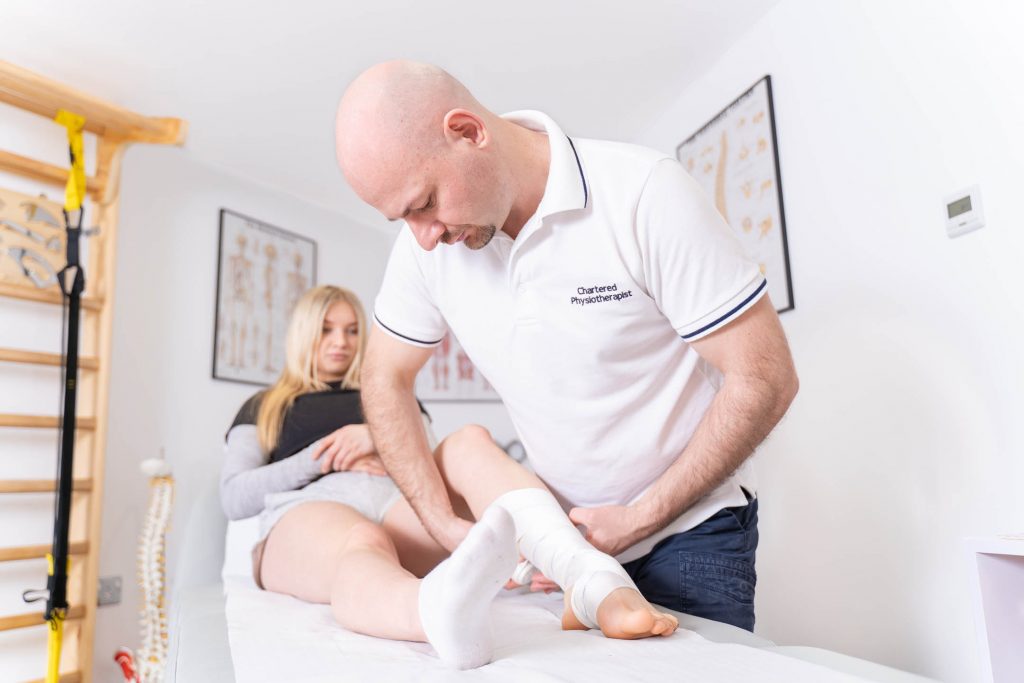
As the weather cools and the leaves start to fall, more people lace up their trainers and head out for longer runs. If you have noticed a sharp or aching pain along the front or inside of your shin, you are not alone. shin splints treatment Southampton is one of the most common reasons runners contact PhysioCraft in the autumn months, especially when they increase distance or return to running after a break.
Why Autumn Triggers Shin Splints for So Many Runners
Autumn is a beautiful time to run, but it is also the perfect storm for shin splints treatment Southampton enquiries. Cooler temperatures feel more comfortable, so you naturally run further or faster. You might also be coming back from a quieter summer or starting a new training plan for winter races. This sudden spike in activity places extra stress on the muscles and bones in your lower legs.
Shin splints, or medial tibial stress syndrome, usually show up as a dull, aching, or sharp pain along the front or inner edge of your shin bone. The pain often starts at the beginning of a run, eases as you warm up, and then returns afterwards. Ignoring these early warning signs can turn a simple irritation into a more serious injury, such as a stress fracture, that can keep you off your feet for weeks or months.
At PhysioCraft in Southampton, you are not just given a generic sheet of stretches and sent home. With almost 20 years of experience and senior musculoskeletal expertise, we look at the full picture: your training history, footwear, running surface, strength, flexibility, and even how your foot hits the ground. This is how we help you understand why your shins are protesting and what you can do about it now—before it becomes a long-term problem.
What Actually Causes Shin Splints? (It’s More Than Just “Running Too Much”)
It is easy to blame shin splints purely on “overuse”, but that does not tell you what to change. Shin splints treatment Southampton at PhysioCraft always starts with understanding the true cause of your pain. In most cases, there is a combination of factors at work rather than a single issue.
Common contributors include a rapid increase in training volume, running too many hills too soon, or suddenly adding sprints and intervals. Hard surfaces, such as pavements or roads, can also increase the impact through your lower legs. If your muscles and bones have not had time to adapt gradually, microscopic damage builds up faster than your body can repair it.
Your unique biomechanics also matter. Flat feet, high arches, or an inward rolling foot (over-pronation) can all change how forces travel up your leg. Tight calves, weak glutes, or stiff ankles further alter how your body absorbs shock. At PhysioCraft we combine physiotherapy, chiropractic, and osteopathy techniques to assess these patterns and identify what is driving your shin pain, not just where it hurts.
Why Autumn Surfaces and Footwear Make a Difference
As autumn progresses, surfaces often become wetter, more slippery, and more uneven. You might instinctively tense up or shorten your stride to stay steady, which changes how your foot lands and how your shin muscles work. If your shoes are worn out from summer use, the cushioning and support may no longer protect your legs effectively.
This is why part of effective shin splints treatment Southampton is simply checking your footwear and surfaces. Sometimes, alternating between softer trails and pavements, or rotating between two pairs of suitable running shoes, can significantly reduce stress on your shins. Your physiotherapist can also advise whether orthotics or specific support might help stabilise your foot and ankle.
When Shin Splints Are Not Just Shin Splints
Shin pain is not always straightforward. Stress fractures, compartment syndrome, or nerve irritation can sometimes mimic shin splints. A thorough assessment-first approach is vital to avoid misdiagnosis and to make sure you do not train through something more serious. At PhysioCraft, your clinician will take a detailed history, perform hands-on tests, and, where needed, may recommend imaging or further investigations to confirm the diagnosis.
How PhysioCraft Assesses Shin Splints: Finding the Real Root Cause
Effective shin splints treatment Southampton begins with a comprehensive assessment. At PhysioCraft, this is never rushed. We want to understand exactly what is happening in your body so we can create a plan that actually works for you, not a generic “one-size-fits-all” routine you could have downloaded online.
Your session will typically start with a detailed conversation about your pain: when it started, what makes it worse, and what you have already tried. We will also discuss your running history, training plan, footwear, and any other sports you do. This helps us spot patterns—such as a sudden increase in mileage or a change in surface—that may be contributing to your symptoms.
Next, we look at how you move. We will assess your ankle, knee, and hip mobility, test muscle strength, and check for areas of tightness or imbalance. Our evidence-based, hands-on assessment is designed to pinpoint the true drivers of your pain, not just the sore area. Where appropriate, we may use advanced diagnostics such as USG diagnostic ultrasound to gain more detail about the tissues involved.
Advanced Tools to Support Accurate Diagnosis
PhysioCraft offers a range of advanced technologies that can support your assessment and treatment journey. For example, diagnostic ultrasound scanning can help visualise soft tissue structures and detect inflammation or more serious issues. This can be especially useful if your symptoms are not responding as expected or if your pain pattern suggests something more complex than typical shin splints.
In some cases, we may also consider whether your foot mechanics would benefit from supportive devices. Our orthopaedic appliances and supports can help correct alignment issues that overload your shins, particularly if you have flat feet, high arches, or a history of recurring lower-leg injuries.
Home Visits for Faster, More Convenient Recovery
If your pain is severe, or if you are juggling family and work commitments, travelling to a clinic can feel like yet another obstacle. That is why PhysioCraft offers home physiotherapy visits across Southampton. Your physiotherapist can assess your shins, review your footwear, and even look at your usual running routes or home exercise space to tailor your plan to your real-life environment.
This approach often leads to faster, more sustainable progress, because your treatment is built around what you can realistically do at home, not just what is possible in a gym or clinic setting.
Personalised Treatment Options for Shin Splints at PhysioCraft
Once we have identified the root cause of your shin splints, we design a 1-to-1 personalised physiotherapy plan just for you. You will never be put into a group session or handed a generic leaflet. Every element of your plan is chosen to relieve pain, restore normal function, and help you return to running with confidence.
Hands-on care is often central to shin splints treatment Southampton. We may use a blend of physiotherapy, chiropractic, and osteopathy techniques to improve joint mobility, release tight muscles, and enhance blood flow to the irritated tissues. This might include joint mobilisation, soft tissue work, and targeted stretches to ease pressure on your shins.
To complement manual therapy, we often prescribe a customised exercise programme. This may focus on strengthening your calves, glutes, and core, improving ankle and hip mobility, and gradually reintroducing impact through carefully progressed drills. Our rehabilitation exercises for runners are designed to fit into your schedule and can be adapted as you improve.
Advanced Therapies: Laser, Shockwave and More
For stubborn or long-standing shin splints, PhysioCraft can offer a range of advanced modalities to support healing. Laser therapy, ultrasound, magnetic therapy, and shockwave therapy can help reduce pain, stimulate tissue repair, and speed up recovery when used alongside a solid rehab plan.
For example, shockwave therapy for chronic shin pain can be particularly useful where traditional methods have not fully resolved symptoms. Your physiotherapist will explain whether these options are appropriate for you and how they fit into your overall recovery strategy.
Manual Therapy and Massage to Ease Pain
Many runners with shin splints also benefit from targeted manual therapy and massage. Techniques such as manual therapy for lower-leg pain and sports massage can help release tight calf muscles, improve circulation, and reduce the build-up of tension that contributes to shin pain.
These hands-on treatments can provide welcome short-term relief while your strengthening and mobility work creates longer-term change. Combining immediate pain relief with a clear plan for long-term prevention is one of the key reasons runners choose PhysioCraft for their care.
How to Prevent Shin Splints When You Love Autumn Running
While effective shin splints treatment Southampton is essential once pain has started, prevention is always better than cure. The good news is that a few thoughtful changes to your training and routine can dramatically reduce your risk of shin splints, especially during the autumn months.
First, focus on gradual progression. Increase your weekly mileage by no more than about 10% at a time, and avoid adding distance and speed in the same week. Mix in easier runs, cross-training, and rest days so that your body has time to adapt to the increased load. If you are returning from a break, treat yourself like a beginner for the first few weeks, even if your fitness feels ahead of your legs.
Second, look at your surfaces and footwear. Try to include some softer ground—like grass or trails—alongside pavements, especially for longer runs. Check your shoes for signs of wear, and replace them when the cushioning and support start to fade. If you are unsure whether your shoes are right for you, your physiotherapist can help you assess them and suggest alternatives if needed.
Strength, Mobility, and Warm-Up Tips
Strong, flexible muscles and mobile joints are your best defence against shin splints. Building a simple routine that targets your calves, ankles, hips, and core can make a significant difference. Exercises such as calf raises, single-leg balance drills, glute bridges, and hip strengthening work help your body absorb impact more effectively.
Before you head out the door, give your lower legs a chance to wake up. A short warm-up of dynamic movements—such as ankle circles, leg swings, and gentle calf stretches—prepares your muscles and tendons for the demands of running. Even 5–10 minutes of preparation can reduce the strain on your shins and improve your overall running comfort.
Listening to Early Warning Signs
Perhaps the most important prevention strategy is learning to listen to your body. If you notice a persistent ache or tightness in your shins that does not settle with rest, ice, or a small reduction in training, do not ignore it. Early intervention can often resolve the problem within a few weeks, whereas pushing through can turn a minor irritation into a serious setback.
In Southampton, you do not have to wait until you can barely walk to seek help. A short course of personalised physiotherapy, combined with clear guidance on training adjustments, can keep your autumn running plans on track and help you enjoy the season pain-free.
Frequently Asked Questions
How long do shin splints usually take to heal?
The healing time for shin splints varies, but with appropriate shin splints treatment Southampton, many runners notice a clear improvement within 2–6 weeks. Mild cases may settle more quickly, while long-standing or severe shin splints can take several months to fully resolve. The key is to combine relative rest with targeted treatment and a gradual return-to-running plan.
Should I stop running completely if I have shin splints?
You may not need to stop running entirely, but you will almost certainly need to modify your training. This might include reducing mileage, avoiding hills and speed work, or switching some sessions to low-impact cross-training. Your physiotherapist at PhysioCraft will help you find the right balance so you can protect your shins while maintaining as much fitness as possible.
Can I treat shin splints at home?
In the very early stages, simple steps like reducing your mileage, applying ice after runs, and gently stretching your calves can help. However, if your pain persists beyond a week or two, or if it is severe, professional assessment is strongly recommended. A personalised treatment plan is the safest way to avoid long-term problems and get back to running confidently.
When should I see a physiotherapist for shin splints?
You should seek shin splints treatment Southampton if your pain is worsening, if it affects your walking, or if it has lasted more than a couple of weeks despite rest and simple self-care. You should also get checked if you feel a very specific, sharp pain on your shin bone, or if there is noticeable swelling, as these can be signs of a stress fracture or other more serious issues.
Take the Next Step Towards Pain-Free Autumn Running
If shin pain is turning your autumn runs into a struggle, you do not have to simply “put up with it” or give up the sport you love. At PhysioCraft in Southampton, we provide 1-to-1, tailored shin splints treatment that focuses on long-term recovery, not just short-term symptom relief. From thorough assessment and hands-on care to advanced therapies and home visit options, every part of your plan is designed around your goals.
Whether you are training for a race, running for fitness, or just enjoying the autumn scenery, we can help you get back on track safely and confidently. Book your personalised shin splints treatment Southampton today by visiting PhysioCraft’s online appointment page, and take the first step towards comfortable, pain-free running this season.