
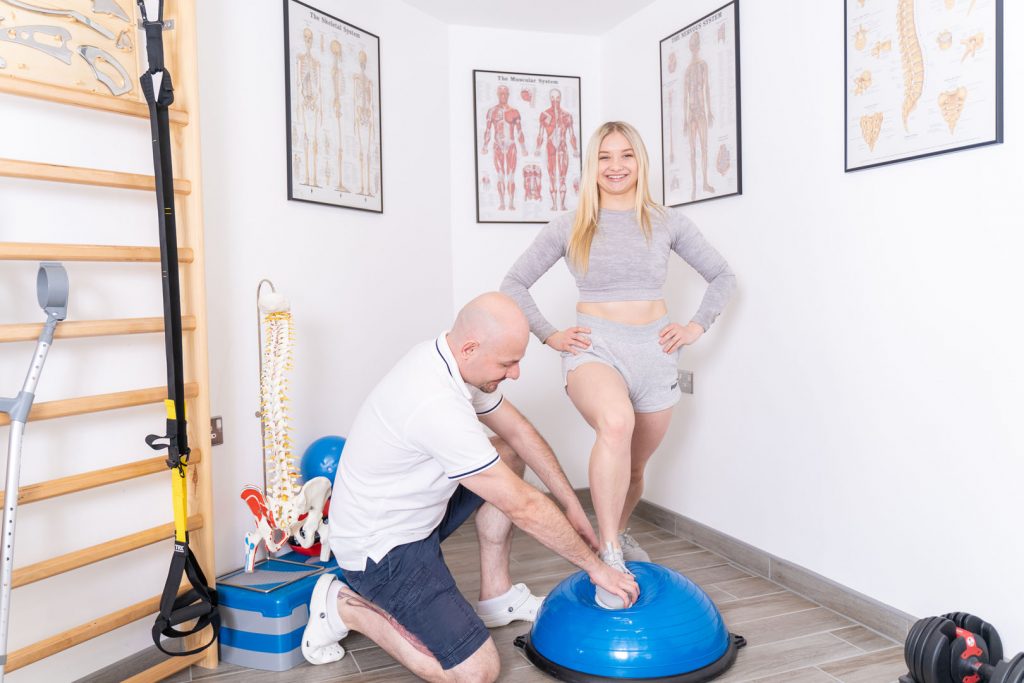
If you’ve recently twisted your ankle and been told to “just walk it off”, you’re not alone. But when it comes to ankle sprain physiotherapy Southampton patients often discover the hard way that ignoring proper rehab leads to repeat injuries, ongoing pain and long-term weakness. At PhysioCraft in Southampton, we see too many people months after their “simple sprain” because it never truly healed.
Why “Walking It Off” Is Risky For Ankle Sprains
In the moment, it’s tempting to keep moving and hope the pain settles. You might be at work, on the pitch or rushing to get somewhere, and stopping feels inconvenient. But walking on a fresh ankle sprain can worsen the ligament damage and increase swelling, making recovery slower and more complicated.
When you sprain your ankle, the ligaments that support the joint are overstretched or torn. If you carry on as normal, those injured tissues are repeatedly stressed. Over time, this can lead to chronic ankle instability, where the joint feels weak, wobbly or “gives way” unexpectedly. That’s why so many people experience repeat sprains on the same side.
At PhysioCraft, we regularly meet patients who say, “I thought it would get better on its own.” Weeks later, they still have pain going down stairs, walking on uneven ground or trying to return to sport. With almost 20 years’ experience and senior musculoskeletal physiotherapy expertise, we know that early, targeted care makes a huge difference to how well – and how quickly – your ankle heals.
What Really Happens Inside Your Ankle When You Sprain It
An ankle sprain isn’t “just a twist”. It’s a genuine injury to the soft tissues that stabilise your joint. Most commonly, you roll your foot inwards, overstretching the ligaments on the outside of the ankle. These ligaments act like strong elastic bands. When they’re forced beyond their normal range, tiny fibres tear – or in more severe cases, larger tears occur.
Immediately after the injury, your body starts an inflammatory response. You’ll notice swelling, warmth and bruising. This is normal and part of the healing process, but if swelling is excessive or prolonged, it can restrict movement and delay recovery. Without the right guidance, you might rest too much or too little – both of which can be unhelpful.
Because PhysioCraft combines physiotherapy, chiropractic and osteopathy techniques, we look beyond the ankle itself. A sprain can also impact the way your foot, knee, hip and even lower back move. If these changes are left unaddressed, you may develop compensations, such as limping, that place extra pressure on other joints and muscles.
Why some sprains are more serious than they look
Not all sprains are equal. Sometimes the pain and swelling seem mild, but deeper structures may still be affected. That’s where advanced assessment tools like USG (ultrasound imaging) come in. At PhysioCraft Southampton, we use diagnostic ultrasound scanning to visualise ligaments, tendons and surrounding tissues in real time. This helps us confirm the extent of the damage and rule out associated issues like tendon tears or small fractures.
By understanding exactly what’s injured, we can tailor your treatment plan and avoid the guesswork that often leads to under-treating or over-treating an ankle sprain.
The hidden problem: loss of joint position sense
After a sprain, your ankle’s ability to sense its position in space (proprioception) is often reduced. This is one of the biggest reasons for repeat sprains. Your brain simply isn’t getting accurate information about where your foot is, especially on uneven surfaces or during quick direction changes.
Without specific rehabilitation exercises to restore this joint position sense, you’re more likely to roll your ankle again. That’s why walking it off without proper rehab is such a common pathway to recurring injuries.
Why Proper Assessment Is The First Step To Long-Term Recovery
Before any treatment begins at PhysioCraft, we carry out a thorough assessment-first approach. This isn’t just a quick look and a few questions. We take the time to understand how you injured your ankle, what you’re struggling with now, and what you want to get back to – whether that’s running, football, walking the dog or simply managing stairs without pain.
Your Physiotherapist will test ligament stability, range of motion, muscle strength, balance and gait (how you walk). When indicated, we may also use USG to provide a clearer picture of the internal structures. This detailed examination allows us to identify the root cause of any ongoing pain or instability, not just treat the visible swelling.
If you’re unable to travel comfortably, PhysioCraft also offers home physiotherapy visits in Southampton. This can be especially helpful in the early days after a severe sprain, allowing you to start guided treatment sooner and avoid delays in care.
Integrated care: more than just exercises
Many people assume ankle sprain rehab is just about a few stretches and balance drills. At PhysioCraft, we integrate evidence-based treatments with hands-on manual therapy to address all aspects of your recovery. This may include joint mobilisation, soft tissue work and specific techniques drawn from physiotherapy, chiropractic and osteopathy to improve alignment and mobility.
By combining these approaches, we can often reduce pain more quickly, restore movement more fully and help you feel confident on your ankle again.
Advanced therapies to speed up healing
For suitable cases, we may recommend advanced modalities such as laser therapy, ultrasound therapy, magnetic therapy or shockwave treatment as part of your ankle sprain rehabilitation. These technologies can help reduce inflammation, stimulate tissue repair and support faster recovery when used alongside a structured exercise programme.
If your sprain is linked to sports or running, we might also discuss footwear, orthotics and load management to reduce the risk of future problems. Our goal is always long-term recovery and prevention, not just short-term pain relief.
How Manual Therapy Helps Ankle Sprains Heal Better
After an ankle sprain, joint stiffness, muscle tightness and scar tissue can all limit your movement. This is where manual therapy really comes into its own. At PhysioCraft, we use precise, hands-on techniques to gently mobilise your ankle joint, improve circulation and reduce pain.
Targeted manual therapy for ankle sprains can help restore the subtle gliding motions between the bones of your foot and ankle that are essential for comfortable walking and running. When these movements are restricted, you may unconsciously alter your gait, placing extra stress on your knees, hips or lower back.
By addressing these mechanical issues early, we can help you avoid a domino effect of problems higher up the chain. Many patients are surprised at how much lighter and more stable their ankle feels even after a few well-targeted sessions.
Combining hands-on care with rehabilitation exercises
While hands-on work is powerful, it’s only one piece of the puzzle. To truly prevent repeat injuries, you also need a structured, progressive exercise plan. At PhysioCraft, we design individualised rehabilitation programmes that match your current level and goals.
These typically include range-of-motion exercises, strength work for the calves and surrounding muscles, and progressive balance and proprioception training. As you improve, we add sport-specific or activity-specific drills so you can return to your normal life with confidence.
When joint adjustment techniques are useful
In some cases, especially where there is lingering stiffness or altered alignment, gentle joint adjustment techniques drawn from chiropractic and osteopathy can be beneficial. These are always applied carefully and only when clinically appropriate, with your full consent and understanding.
The aim is to restore normal joint mechanics, reduce protective muscle guarding and help your ankle move freely again. This is particularly important if you’ve had multiple sprains over the years and feel like your ankle has “never been the same since”.
What To Expect From Ankle Sprain Physiotherapy In Southampton
When you come to PhysioCraft for ankle sprain physiotherapy Southampton, your treatment plan is entirely one-to-one and tailored to you. There are no group sessions or generic protocols. Instead, you’ll work directly with a senior musculoskeletal physiotherapist who understands the demands of sport, work and everyday life.
Your sessions may include a blend of manual therapy, exercise progression, taping techniques, and where appropriate, advanced modalities such as laser or ultrasound therapy. We’ll also guide you on how to manage your ankle between sessions – including when to rest, when to move, and how to safely increase your activity.
If you’re an athlete or active person, we’ll plan your rehab around your training and competition schedule as much as possible. Our aim is to help you return to your sport stronger and more resilient than before, not just back to “good enough”.
Home visits for convenience and faster recovery
If getting to the clinic is difficult immediately after your injury, our mobile physiotherapy service in Southampton can bring expert care to you. Home visits can be especially helpful if you’re unable to weight-bear, have limited transport, or simply prefer to start rehab in the comfort of your own environment.
We can assess your ankle, provide early treatment, and show you safe, effective exercises you can do at home. This early input often makes a big difference to swelling control, pain levels and how quickly you can progress to more advanced rehab.
Supporting you from first step to full return
Recovery from an ankle sprain isn’t just about the first few weeks. At PhysioCraft, we stay focused on your long-term outcome. That means guiding you through the later stages of rehab – when pain might be gone, but strength, balance and confidence still need work.
We’ll help you navigate the tricky transition back to running, jumping, cutting and pivoting movements if your sport demands it. By the time you’re discharged, you’ll know exactly what to continue doing to keep your ankle strong and reduce the risk of future sprains.
Signs You Need More Than Just Rest For Your Ankle Sprain
It can be hard to know when a sprain is “bad enough” to see a physiotherapist. As a general rule, if you’re still limping, swollen or worried about your ankle after a few days, it’s worth getting it properly assessed. Early intervention can save you months of frustration later.
Consider booking an appointment if you notice any of the following:
- Ongoing pain or swelling more than a week after the injury
- Difficulty putting weight through the foot or walking normally
- A feeling that the ankle is weak, wobbly or may give way
- Pain when going down stairs or walking on uneven ground
- Multiple sprains on the same ankle over the past months or years
These are all signs that your ankle may not have healed fully, or that there are underlying issues with strength, stability or joint mechanics that need attention.
When imaging such as USG is particularly helpful
If your symptoms are severe, unusual or not improving as expected, USG can provide valuable extra information. Ultrasound imaging allows us to check the integrity of ligaments and tendons, look for fluid collections, and assess how tissues move in real time.
This can be especially useful if you’ve had a traumatic injury, heard a “pop” at the time of the sprain, or have persistent pain in specific areas around the ankle. With clearer information, we can make better decisions about your treatment and whether further medical input is needed.
Frequently Asked Questions
How soon should I start physiotherapy after an ankle sprain?
You can usually start gentle ankle sprain physiotherapy Southampton within a few days of injury, once serious issues like fractures have been ruled out. In the early phase, treatment focuses on pain relief, swelling control and safe movement. Starting too late often means stiffness and weakness have already set in, making recovery longer.
Do I really need imaging like USG for my ankle sprain?
Not every sprain needs USG, but it can be extremely useful when the severity is unclear, symptoms are not following a normal pattern, or you’ve had repeated injuries. At PhysioCraft, we use ultrasound selectively to enhance our clinical assessment, not to replace it. If we feel it would add value to your care, we’ll explain why and how it could help guide your treatment.
Can manual therapy help if my sprain is months old?
Yes. Even if your injury is not recent, manual therapy combined with targeted rehabilitation exercises can still improve mobility, strength and confidence. Many people with old ankle sprains have lingering joint stiffness, scar tissue and poor proprioception that respond well to a structured physiotherapy programme, even months or years later.
How long will it take before I can return to sport?
The timeframe varies depending on how severe your sprain is, your general health and how closely you follow your rehab plan. Mild sprains may allow a return to light sport within a few weeks, while more significant injuries can take several months for full performance. At PhysioCraft, we’ll give you a realistic timeline and clear milestones so you know exactly where you are in your recovery.
Take The Next Step Towards A Stronger, More Stable Ankle
If you’re in Southampton and still hoping your ankle sprain will “just sort itself out”, now is the time to change approach. With one-to-one, personalised care, advanced assessment tools like USG, and a blend of physiotherapy, chiropractic and osteopathy techniques, PhysioCraft is here to help you achieve lasting recovery – not just temporary pain relief.
Don’t wait for another “mysterious” twist or setback. Book your ankle sprain assessment today and start rebuilding strength, stability and confidence in every step. You can arrange your appointment online via PhysioCraft’s booking page, and take the first step towards getting back to the activities you love in Southampton.