
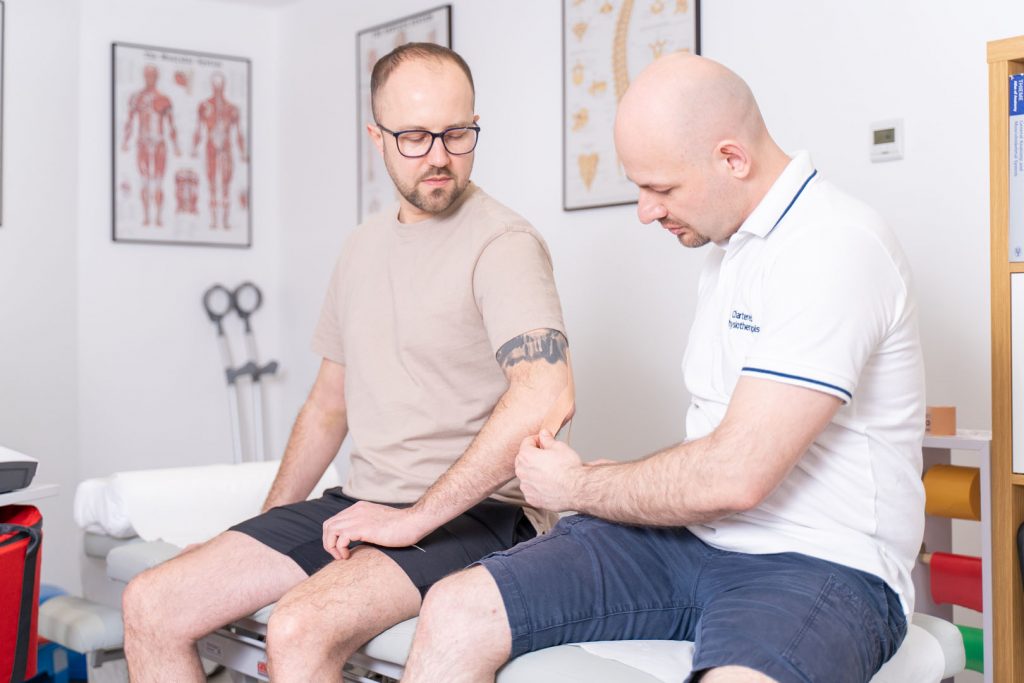
If you’re struggling with nagging elbow pain and searching for golfer’s elbow physio Southampton, you might be wondering whether you actually have golfer’s elbow, tennis elbow – or something else entirely. Although the names sound similar, these two conditions affect different parts of your elbow, respond differently to certain movements, and sometimes need slightly different treatment approaches to get you back to pain-free activity.
Understanding Golfer’s Elbow vs Tennis Elbow: What’s the Difference?
Both conditions are types of overuse injuries that affect the tendons around your elbow, but they occur on opposite sides. Knowing this difference is the first step to choosing the right help and avoiding months of unnecessary pain.
Golfer’s elbow (medial epicondylitis) affects the tendons on the inside of your elbow. It’s often linked to gripping, wrist flexion (bending your wrist towards your palm), and repetitive forearm movements. You don’t have to play golf to develop it – typing, DIY, weight training, and manual work can all trigger it.
Tennis elbow (lateral epicondylitis) affects the tendons on the outside of your elbow. It’s commonly associated with backhand strokes in tennis, but just like golfer’s elbow, it often appears in people who don’t play any sport at all. Repetitive lifting, using a mouse, or even carrying shopping bags can all irritate these tendons.
Key Symptoms: How to Tell Golfer’s Elbow and Tennis Elbow Apart
When you’re in pain, you simply want answers. Being able to recognise whether your symptoms match golfer’s elbow or tennis elbow helps you decide when to seek professional support – and which movements to be more careful with.
With golfer’s elbow, pain is usually felt on the inner (medial) side of your elbow, where the tendons attach to the bony bump. You may notice:
- Aching or sharp pain on the inside of the elbow, sometimes travelling down the forearm
- Discomfort when gripping, turning a doorknob, pouring a kettle, or doing a golf or throwing motion
- Weakness when trying to hold objects, especially with your palm facing up
With tennis elbow, pain is usually on the outer (lateral) side of your elbow. Typical signs include:
- Tenderness when you press the bony area on the outside of the elbow
- Pain when lifting a kettle, shaking hands, or performing a backhand-type movement
- Difficulty gripping items like mugs, tools, or a racquet without pain
Simple Self-Checks You Can Try at Home
These simple tests are not a diagnosis, but they can give you clues. For suspected golfer’s elbow:
- Straighten your elbow, turn your palm upwards, and bend your wrist towards you against gentle resistance. If this reproduces inner elbow pain, golfer’s elbow is more likely.
For suspected tennis elbow:
- Straighten your elbow, turn your palm downwards, and lift your hand back towards you against resistance. If this brings on outer elbow pain, tennis elbow is more likely.
When Symptoms Overlap
In real life, things are not always textbook. You might feel pain both inside and outside the elbow, or symptoms that change from day to day. In these cases, a thorough assessment-first approach becomes crucial to avoid treating the wrong problem or missing an underlying cause such as nerve irritation, neck involvement, or arthritis.
Why a Proper Assessment Matters More Than the Label
Whether you think you have golfer’s elbow or tennis elbow, the most important step is understanding why your elbow has become overloaded in the first place. At PhysioCraft in Southampton, your journey starts with a detailed, 1-to-1 assessment – not a quick glance and a generic exercise sheet.
A senior musculoskeletal physiotherapist will look at:
- Your posture, shoulder and neck mobility, and how you use your arm in daily life
- Your work set-up, sports technique, and training load
- Previous injuries that may be forcing your body to compensate
This assessment-first approach helps identify the true root cause, not just the irritated tendon. For some people, the main issue might be poor shoulder control; for others, it could be tightness in the neck or upper back, or even weakness lower down the arm.
If needed, advanced diagnostics such as ultrasound imaging of the elbow can provide more detail on the state of the tendon and surrounding tissues. This allows your physio to tailor your treatment plan precisely to your condition, stage of healing, and goals.
How PhysioCraft Treats Golfer’s Elbow and Tennis Elbow
Once it’s clear whether you’re dealing with golfer’s elbow, tennis elbow, or a combination of both, treatment can be targeted and efficient. At PhysioCraft in Southampton, treatment is always 1-to-1 and completely personalised – no group sessions or copy-and-paste plans.
Your physio may combine elements of physiotherapy, chiropractic, and osteopathy techniques to improve joint mobility, reduce tension, and restore normal movement patterns. This hands-on approach is often paired with specific strengthening and stretching exercises to build resilience in the affected tendons.
Hands-On Treatment to Reduce Pain and Improve Movement
Manual techniques can play a key role in easing pain so you can start moving better, sooner. These may include:
- Manual therapy to improve the way your elbow, wrist, and neck joints move
- Soft tissue and sports massage to release tight forearm muscles
- Gentle joint mobilisation or adjustment where appropriate to optimise mechanics
At PhysioCraft, evidence-based hands-on care is combined with exercise and education so you understand what’s happening and how to prevent the problem returning. The aim is not just symptom relief, but long-term recovery and prevention.
Exercise Rehabilitation for Stronger, More Resilient Tendons
Both golfer’s elbow and tennis elbow respond well to a structured, progressive loading programme. This means carefully chosen exercises that gradually challenge your tendons, helping them adapt and become stronger over time.
Your tailored plan might include grip strengthening, wrist loading, forearm stretches, and shoulder stability work. These are progressed at a pace that respects your pain levels and healing stage, so you keep moving forwards without repeatedly flaring things up.
To support this, your physio may guide you through a personalised rehabilitation exercise programme that you can continue at home or the gym, with clear instructions and progression.
Advanced Therapies: When Shockwave Therapy and Other Options Help
Sometimes, especially if your pain has been going on for months, tendons can become stubborn and slow to respond. This is where advanced treatments like Shockwave therapy can make a real difference alongside your exercise plan.
Shockwave therapy uses targeted sound waves to stimulate blood flow and healing in the affected tendon. Many people with long-standing golfer’s elbow or tennis elbow find that it helps reduce pain and kick-starts recovery when other approaches have plateaued.
How Shockwave Therapy Fits into Your Treatment Plan
At PhysioCraft, Shockwave therapy is never used in isolation. It’s part of a broader, evidence-based approach that may also include:
- Shockwave therapy sessions in Southampton to stimulate tendon healing
- Targeted strengthening and loading exercises to build long-term resilience
- Manual therapy and soft tissue work to optimise how your elbow and forearm move
Other advanced options such as laser therapy, ultrasound therapy, or magnetic therapy may also be recommended depending on your specific presentation and how sensitive your elbow is at the start of treatment.
Is Shockwave Therapy Right for You?
Shockwave therapy can be especially helpful if:
- You’ve had golfer’s or tennis elbow for several months or longer
- Rest, ice, and basic exercises haven’t made enough difference
- You want to avoid relying on painkillers or injections where possible
Your physio will discuss the pros and cons with you, taking into account your medical history, pain levels, and goals. The focus is always on choosing the safest, most effective combination of treatments to get you back to the activities you love.
Home Visits and Daily-Life Advice for Faster, More Comfortable Recovery
When your elbow hurts, even small tasks like making a cup of tea or getting dressed can feel like a challenge. That’s why treatment at PhysioCraft goes beyond the clinic room.
If it’s difficult for you to travel, home physiotherapy visits in Southampton are available. Your physio can assess how you move in your own environment, suggest simple adaptations, and guide you through exercises using the equipment and space you actually have.
You’ll also get clear, practical advice on how to:
- Modify your work set-up to reduce strain on your elbow
- Adjust your training or sport technique while you recover
- Use supports or taping where appropriate to make daily tasks more comfortable
The goal is always the same: reduce pain, improve mobility, and help you return to normal life as quickly and safely as possible.
Preventing Future Flare-Ups: Looking Beyond the Elbow
Once your symptoms start to settle, the next step is making sure they don’t keep coming back. Both golfer’s elbow and tennis elbow often flare when the underlying causes haven’t been fully addressed.
Your physio will help you understand the specific triggers for your pain – whether that’s poor lifting technique, sudden spikes in training, or long hours at a computer without breaks. From there, you’ll work together on a plan that might include:
- Gradual return-to-sport or return-to-work guidelines
- Strength and conditioning for your shoulders, arms, and grip
- Posture and movement coaching to reduce unnecessary strain
By combining hands-on treatment with education and tailored exercise, PhysioCraft focuses on long-term prevention, not just short-term symptom relief. This holistic approach is what helps many people in Southampton get back to golf, tennis, the gym, or manual work with renewed confidence.
Frequently Asked Questions
Can I have both golfer’s elbow and tennis elbow at the same time?
Yes, it’s possible to have irritation on both the inner and outer sides of the elbow, especially if your arm has been overloaded for a long time. This is another reason why a detailed assessment is so important – you may need a slightly different approach for each side, as well as addressing contributing factors higher up the arm and into the neck and shoulder.
Do I need to stop sport or work completely while I recover?
In most cases, you don’t have to stop everything. Instead, your physio will help you modify certain movements, loads, or techniques so you can stay as active as possible without constantly aggravating the tendon. This might mean changing your grip, reducing heavy lifting for a while, or temporarily adjusting how often you play sport while your elbow heals.
How long does golfer’s or tennis elbow take to heal?
Recovery time varies depending on how long you’ve had symptoms, how irritated the tendon is, and how consistently you follow your treatment plan. Mild cases may improve within a few weeks, while more chronic problems can take several months. With a structured plan that may include exercise, hands-on care, and options like Shockwave therapy, many people notice meaningful improvements within the first few sessions.
When should I see a physio for elbow pain?
If your elbow pain has lasted more than a couple of weeks, is getting worse, or is affecting your sleep, work, or sport, it’s a good time to see a physiotherapist. You should also seek help sooner if you notice significant weakness, locking, or unusual swelling. Early assessment helps you avoid long-term problems and gives you a clear plan, whether you’re dealing with golfer’s elbow, tennis elbow, or another condition entirely.
Conclusion: Get Clear Answers and Personalised Help in Southampton
Whether your pain turns out to be golfer’s elbow, tennis elbow, or a mix of both, you don’t have to keep guessing – or putting up with it. At PhysioCraft in Southampton, you’ll receive 1-to-1, personalised care from an experienced musculoskeletal physiotherapist who will take the time to properly assess, explain, and treat your condition.
If you’re ready to find out what’s really causing your elbow pain and start a tailored recovery plan – potentially including advanced options like Shockwave therapy where appropriate – you can book an appointment online with PhysioCraft in Southampton. A clear diagnosis and focused treatment plan can be the difference between months of frustration and a confident return to the activities you enjoy.